




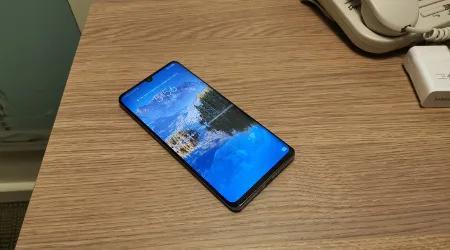


The good
- Easier to handle than the P30 Pro
- Good battery life
- Kirin 980 is a powerhouse
- Headphone jack
The bad
- Proprietary storage format
- Prone to fingerprints and scratches
- Limited water resistance
- EMIU is still a messy UI
- Lacks wireless charging
The Huawei P30 is the more affordable of Huawei's current P-series range, and while that does mean that there are aspects that make the P30 Pro a more compelling option, the reality is that not everyone can or will want to match its asking price.
For what it offers in its entry-level-premium price point, the Huawei P30 is an exceptional phone in its own right, even if it is somewhat overshadowed by its bigger brother.
Handpicked deals, direct to your inbox
Subscribe to the Finder Shopping newsletter for the latest shopping and travel deals
Error placeholder Click here to sign in
Design
- Only two colour choices in Australia
- Water-drop notch
- In-glass fingerprint sensor works well
- Headphone jack
- Smudges very easily thanks to glass back

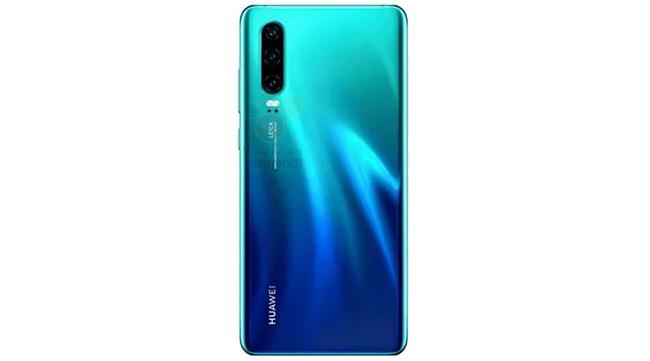
Read more about the Huawei P30's design
Huawei's P-series phones are its "fashion" line, and this year Huawei came out with a dazzling range of colour choices for the Huawei P30 and Huawei P30 Pro. There's a standard Black, Pearl White, Amber Sunrise (or red, in non-marketing speak), Aurora (blue) or Breathing Crystal (Silver/Blue).
Or at least, globally, the Huawei P30 exists in those colours. Here in Australia, we're only getting two variants, the Aurora and Breathing Crystal colours. It's the latter I've tested with, and it's more or less the softer colour variant of last year's Twilight P20, with a shifting and shimmering effect that's definitely eye catching. The entire rear of the phone is wrapped in glass, which aids in the reflective shimmering pattern, but also predictably means that it picks up fingerprints like it's a crime scene in the making.
The Huawei P30 is a little smaller than the P30 Pro, which means that you're looking at is a 6.1-inch 2340 x 1080 OLED, rather than the 6.47-inch 2340 x 1080 OLED on the Pro model. That's still a decent size for a display, and the reduction in the diagonal also means that it's a little easier to hold in the hand or slip into a pocket.
Like the Huawei P30 Pro (and indeed, the Huawei Mate 20), the Huawei P30 uses a "water drop" style notch to hide the front camera. Your notch tolerance may vary, but it's mostly unobtrusive. You can easily opt to have the entire top appear as a black bezel in settings if you really loathe the notch.
Huawei hasn't gone down the path of adding additional assistant buttons to its phones just yet, which means that you're faced with right hand side controls for power and volume, and a left hand side SIM card slot. The one big and very welcome difference that you get with the Huawei P30 compared to the Huawei P30 Pro is the inclusion of a proper 3.5mm headphone jack.
However, you can't get something for nothing, and the trade-off here is that the Huawei P30 Pro is only IP53 rated for water resistance. You could (but shouldn't) dunk the P30 Pro into fresh water and expect it to survive, but the same kind of immersion could be fatal for the Huawei P30.
There's no rear-mounted fingerprint sensor on the Huawei P30 because like the larger model, it features an in-display fingerprint sensor. Huawei first added this technology with the Huawei Mate 20 Pro, but it was quite slow and error prone. Thankfully, it's much quicker to respond on the Huawei P30, but there's still a noticeable learning curve when you're first getting used to pressing on the screen to unlock your phone.
Camera
- Triple rear lenses
- SuperSpectrum sensor is amazing in low light
- Wider aperture wide-angle lens than the P30 Pro
- 30x zoom isn't good
- A fun phone to fine-tune your camera skills
Read more about the Huawei P30's camera including photo samples
It's in the camera space that Huawei really separates the Huawei P30 from its Pro counterpart. That's not to say that the Huawei P30 is an absolute slouch when it comes to camera prowess. Indeed, the more I've tested it, the more I've appreciated that it's basically the Huawei Mate 20 Pro's camera, which is already excellent, with just a few key tweaks on board.
At the rear, the Huawei P30 features the same 40MP "SuperSpectrum" sensor found on the primary model, which means that right away it's got some of the best low-light performance for direct photography seen on any phone to date.
You also get Huawei's "night mode", which blends together multiple exposures in the same style as Google's Pixel 3 phone's "Night" mode. Under the right conditions, it can produce some truly stunning images, although it's not quite capable of seeing in the dark. Where Google's version uses a lot of AI to provide colour context, Huawei's night mode tends to deliver slightly less saturated images. That's generally a plus, as it means that they appear more natural in the final image.
Where the Huawei P30 steps down from the P30 Pro is in the other lenses, with no time-of-flight sensor and a slightly different arrangement for its wide and telephoto lenses. The wide lens drops from 20MP to 16MP f/2.2 on the Huawei P30, but while the telephoto lens has an 8MP sensor, it's f/2.4 where the P30 Pro's is f/3.4. That's almost certainly down to the P30 Pro's periscope style lens that lends it a native 5x optical zoom. For the Huawei P30, that's limited to 3x optical and 5x "hybrid" zoom.
So how does that translate to an actual photo? Let's use Sydney's famous Opera House at Circular Quay as an example.
Here's a shot using the Huawei P30's wide lens:


Here's the same shot using the Huawei P30's standard lens:


And once again, at 3x zoom, which is the maximum true optical zoom lens distance:


And then at 5x "hybrid" zoom, with results that are still generally pleasing:


Like the Huawei P30 Pro, the same cannot be said of the digital zoom that stretches beyond 5x all the way up to 30x zoom. You quickly lose detail and colour saturation, even as you do move in closer:

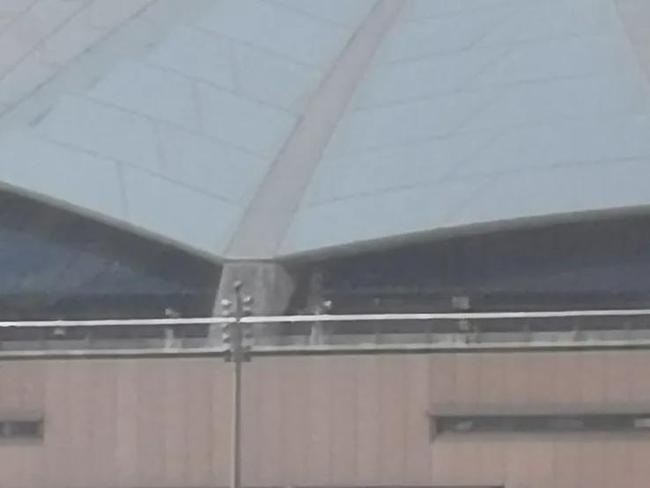
Like the Huawei P30 Pro, while still imagery can be exceptional, the same isn't true of its video prowess, where shuddering video is sadly the norm. It's an area where Huawei's definitely in need of improvement because while its still photography skills are immense, it just hasn't cracked pleasing video yet.
Overall, it's not hard to conclude that while the Huawei P30 Pro is where it's currently at with regards to the best smartphone camera prowess, the Huawei P30 pretty comfortably grabs a high ranking all by itself. When you consider that it's several hundred dollars cheaper, that makes it quite remarkable.
Huawei P30 Sample Photos








Performance
- Kirin 980 provides plenty of power
- EMUI is still messy and cluttered
- Screen vibration is good for calls but not for music or video
Read more about the Huawei P30's performance
The Huawei P30 shares the Kirin 980 processor we first saw in the Huawei Mate 20 and Mate 20 Pro as well as in the P30 Pro. It's Huawei's own processor family, and one of the very few that takes on Qualcomm in the Android space.
The Huawei P30 keeps the costs low with 6GB of onboard RAM and 128GB of storage, but that doesn't particularly affect its performance. Here's how it compares in our top ten performer rankings for Geekbench 4's CPU test:
Apple's iPhone lines dominate that test, but it's also interesting to see where the Huawei P30 ranks purely against Android competitors:
It's a less favourable comparison for the Huawei P30 on the graphics front, where it doesn't push as hard as many Android competitors. Here's how it compares using 3DMark's Slingshot Extreme test:
The Huawei P30 runs on Android 9 ("Pie"), but you might not pick that up straight away because Huawei's EMUI launcher changes up the interface quite markedly.
EMUI has long been my least favourite part of the Huawei experience because it's often inconsistent and can be downright frustrating. I'd love to see how the Huawei P30 performed if it was, say, an Android One device with only Huawei's camera software on board.
Instead, what you get is a hodgepodge of Huawei services that duplicate existing Android apps and often get quite pushy if they're not enabled by default.
Huawei only produces the Huawei P30 in a 128GB storage variant, and while it does support expandable storage, that's only via Huawei's own "nm" memory card format. It's handy to be able to add storage to an Android phone, but nm cards are significantly more expensive than their SD card counterparts. As such, you'll pay quite a bit more to add storage to the Huawei P30.
Battery life
- 3650mAh battery provides easy all-day battery life and more
- Aggressive battery optimisation
- Fast wired charging
- No wireless charging
Read more about the Huawei P30's battery life
The smaller frame of the Huawei P30 means that it simply can't accommodate the battery capacity of its bigger sibling, but that doesn't mean it's a particular slouch in battery terms. Here's how the Huawei P30 compares against other flagship phones in Geekbench 4's battery test:
The Geekbench 4 battery test is entirely linear, which means it's putting a constant workload to the phones tested that way. That rarely matches up with how we use our phones in day-to-day life. The Huawei P30 impresses on anecdotal testing, never once failing before a day was up in my tests, even when running it hard.
Huawei provides its own fast charger for the Huawei P30, and it's quite fun watching the battery percentage tick upwards when you plug it in. What's notably absent here is any form of wireless charging. The Huawei P30 has a slick glass back, but it's all for show, not to enable Qi-based wireless charging. If that's an important feature for you, you'll have to upgrade to the Huawei P30 Pro.
Verdict
- The Huawei P30 is shaping up to be a great phone
Read our Huawei P30 verdict
There's no doubting that the star player for Huawei right now is the Huawei P30 Pro, but for most folks, the Huawei P30 is actually likely to be a better choice. It's not quite as powerful in camera or battery terms, and those features are ones that propel the Huawei P30 Pro ahead of its cheaper sibling.
However that price difference is quite stark whether you're looking at the Huawei P30 on an outright basis or on contract. We've seen a creep in pricing upwards for premium phones in recent times, but the Huawei P30 is priced more towards a level that many consumers will be comfortable with.
Pricing and availability
- Price: RRP $1099
- Where to buy: Amazon Australia | eBay |
Huawei P30 specifications
Display
Camera
Physical Dimensions
Connectivity
Power, storage and battery
Device features
Latest Huawei news
Camera Shootout: Galaxy S10+ vs iPhone XS Max vs Huawei P30 Pro vs Huawei Mate 20 Pro vs Pixel 3
We hit the streets of Paris and Sydney to find the low light camera king, with surprising results.


Camera Shootout: Galaxy S10+ vs iPhone XS Max vs Mate 20 Pro vs Pixel 3 vs Galaxy S9+
It's time to pit the flagship phones against each other to see who can deliver the most consistently pleasing low-light results.
Huawei Nova 2i review: Plans | Pricing | Specs
The Huawei Nova 2i sells itself on the inclusion of four cameras, but that's actually not its best feature.